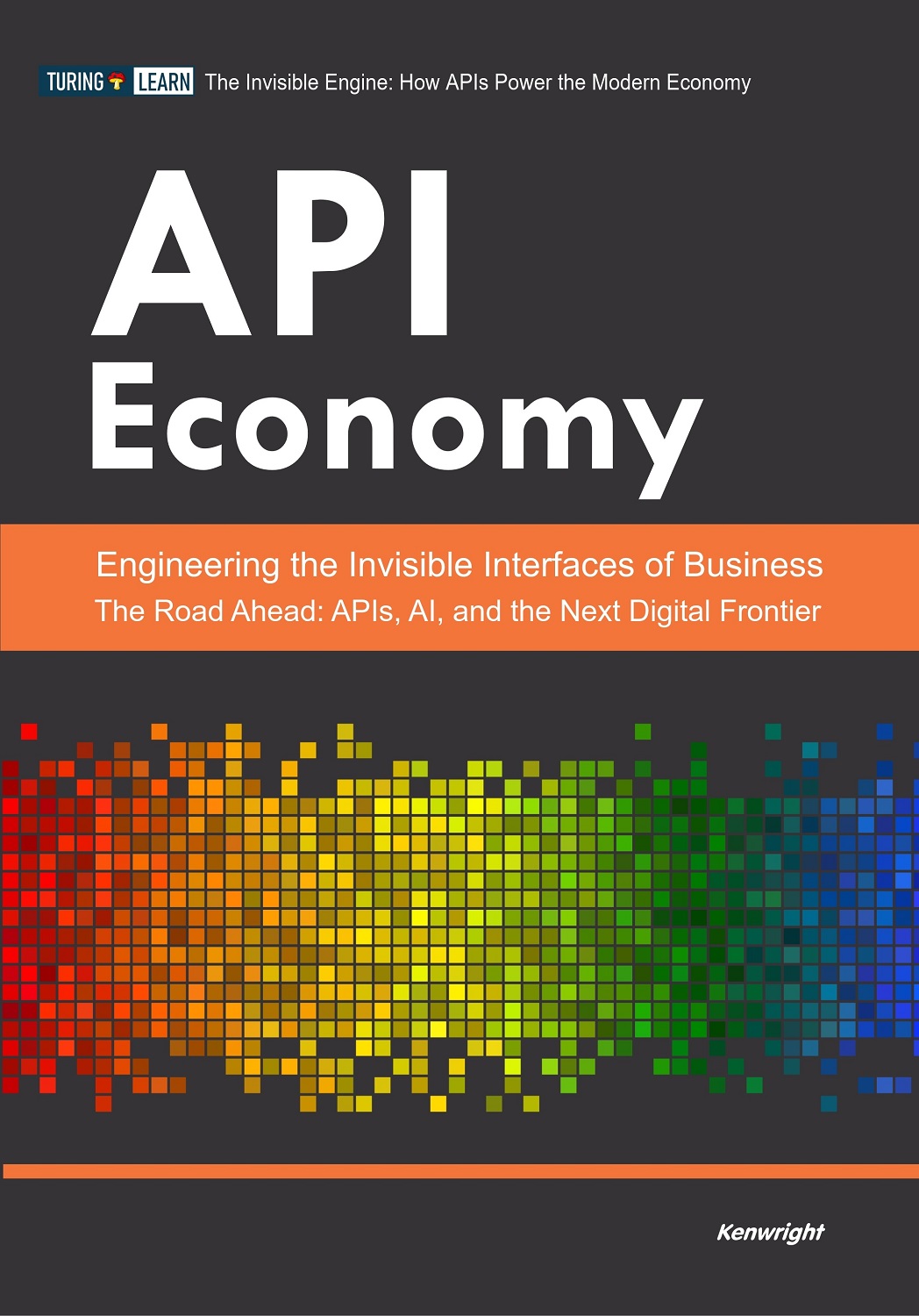
A groundbreaking exploration of API Economy and its impact on the contemporary issues. This essential read offers fresh perspectives and practical insights that will transform your understanding.
The book's title, "API Economy", reflects its central theme: a bold exploration of ideas that challenge conventional thinking and encourage intellectual growth. The carefully structured chapters build upon each other, creating a learning journey that is both educational and inspiring. Each section includes practical examples and thought-provoking exercises. Whether you're seeking to deepen your understanding or simply explore new perspectives, "API Economy" offers a rewarding experience that lingers long after the final page.
I found myself highlighting nearly every page—so many quotable insights.
The author's voice is both authoritative and approachable, making complex ideas feel accessible.
Same here. It’s rare to find a book that’s both intellectually rigorous and emotionally engaging.
June 17, 2026
The depth of research is impressive, yet it never feels overwhelming.
Absolutely! The author's tone made it feel like a conversation rather than a lecture.
June 14, 2026Couldn't agree more. The real-world examples made all the difference for me.
June 13, 2026Stay updated with the latest from the book world
Emily Temple reads every summer reading list (so you don’t have to). | Lit Hub Reading Lists Why Robert W. Service’s “The Cremation of Sam ...
Read MoreI’m a woman in my early sixties. Somewhere between late and never. No longer the career woman, mother, housewife and lover doing it all, meeting eve...
Read MoreToday in New York, you can’t get to lower Manhattan because the streets are clogged with Knicks fans. My town is still on fire from their histor...
Read MoreEnhance your reading and learning experience
Organize books by color for visual appeal or by genre for practical access.
Create a dedicated reading space with good lighting and minimal distractions.
Write documentation as if the next person reading it is a violent psychopath who knows where you live.
Rubber Duck Debugging: explain your code line by line to an inanimate object.
Follow the 20-20-20 rule: every 20 minutes, look at something 20 feet away for 20 seconds.
Use the Feynman Technique: teach what you learn to someone else to identify knowledge gaps.
Sarah Johnson
Professional ReviewerGreat point! I especially appreciated the chapter on implementation strategies.
June 8, 2026